

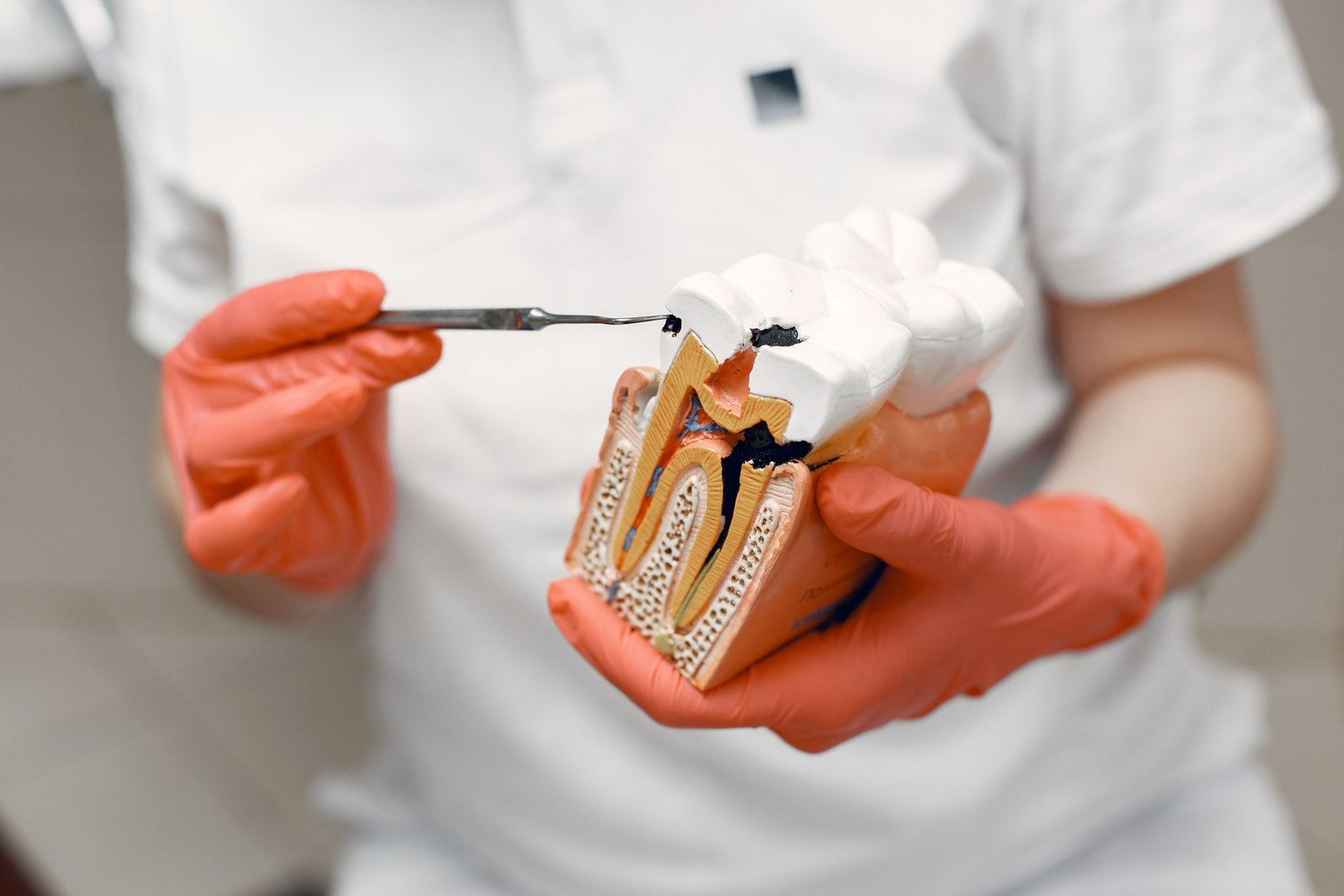
A tooth abscess is a serious dental infection that develops when bacteria collect inside the tooth or surrounding gums. It is commonly caused by untreated tooth decay, injury, or advanced gum disease affecting the affected area. This can lead to severe pain, swelling, and other oral health complications if left untreated. Early diagnosis and prompt treatment help eliminate infection, protect your teeth, and restore lasting oral health.
Know the Signs
Common Symptoms
A tooth abscess may develop gradually or cause sudden, severe discomfort without warning. If you’re experiencing any of the following symptoms, it’s a good idea to schedule a dental evaluation.
- Severe Tooth Pain: Persistent throbbing pain that may spread into the jaw or ear.
- Swollen Gums: Inflamed gums around the affected tooth may become tender and painful.
- Facial Swelling: Swelling around the cheek or jaw may indicate a spreading infection.
- Bad Taste: Pus draining from the abscess may leave an unpleasant taste or odor.
- Pain While Chewing: Biting down may increase pressure and cause sharp tooth discomfort.
- Fever or Fatigue: Discomfort may continue even after the trigger has been removed.

Why It Happens
Underlying Causes
A tooth abscess develops when bacteria enter the inner tooth or surrounding tissues. Identifying the underlying cause helps eliminate infection and prevent further complications.
- Tooth Decay: Deep cavities allow bacteria to reach the inner tooth and surrounding tissues.
- Cracked Tooth: Small fractures can create openings that allow bacteria to enter the tooth.
- Gum Disease: Advanced gum infection may spread and lead to painful dental abscesses.