
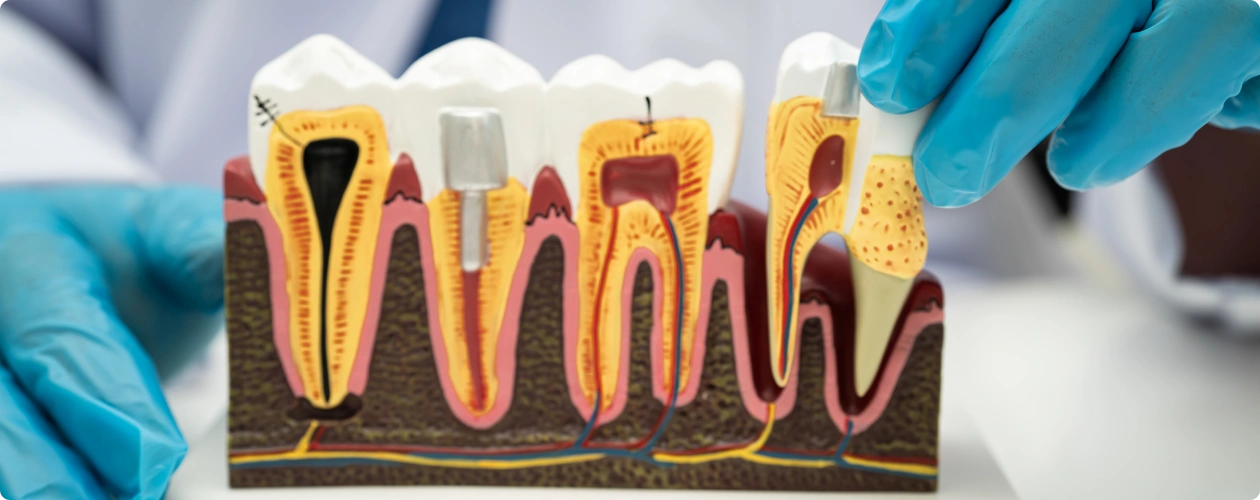
Gum disease is a common oral health condition that affects the gums and supporting structures around your teeth. It is typically caused by plaque buildup that leads to inflammation, infection, and gradual tissue damage over time. Left untreated, it can result in bleeding gums, tooth loss, and other serious dental complications. Early diagnosis and professional treatment help restore gum health, protect your teeth, and prevent further damage.
Know the Signs
Common Symptoms
Gum disease often develops gradually, and the early warning signs can be easy to miss. If you’re experiencing any of the following symptoms, it’s a good idea to schedule a dental evaluation.
- Bleeding Gums: Gums that bleed during brushing or flossing may indicate early disease.
- Swollen or Red Gums: Inflamed gum tissue can become tender, irritated, and noticeably swollen.
- Persistent Bad Breath: Bacteria beneath the gums may cause ongoing unpleasant breath or odor.
- Gum Recession: The gums may gradually pull away, exposing more of each tooth.
- Loose Teeth: Weakened supporting tissues can make teeth feel less secure over time.
- Pain While Chewing: Discomfort when biting may result from inflamed gums or infection.
Why It Happens
Underlying Causes
Gum disease develops when harmful bacteria and plaque build up around the teeth and gums. Identifying the underlying cause helps prevent further damage and restore healthy gum tissue.
- Plaque Buildup: Bacteria collect along the gumline, causing irritation and ongoing inflammation.
- Poor Oral Hygiene: Inadequate brushing and flossing allow harmful plaque to accumulate more easily.
- Tobacco Use: Smoking weakens gum tissue and increases the risk of severe infection.