

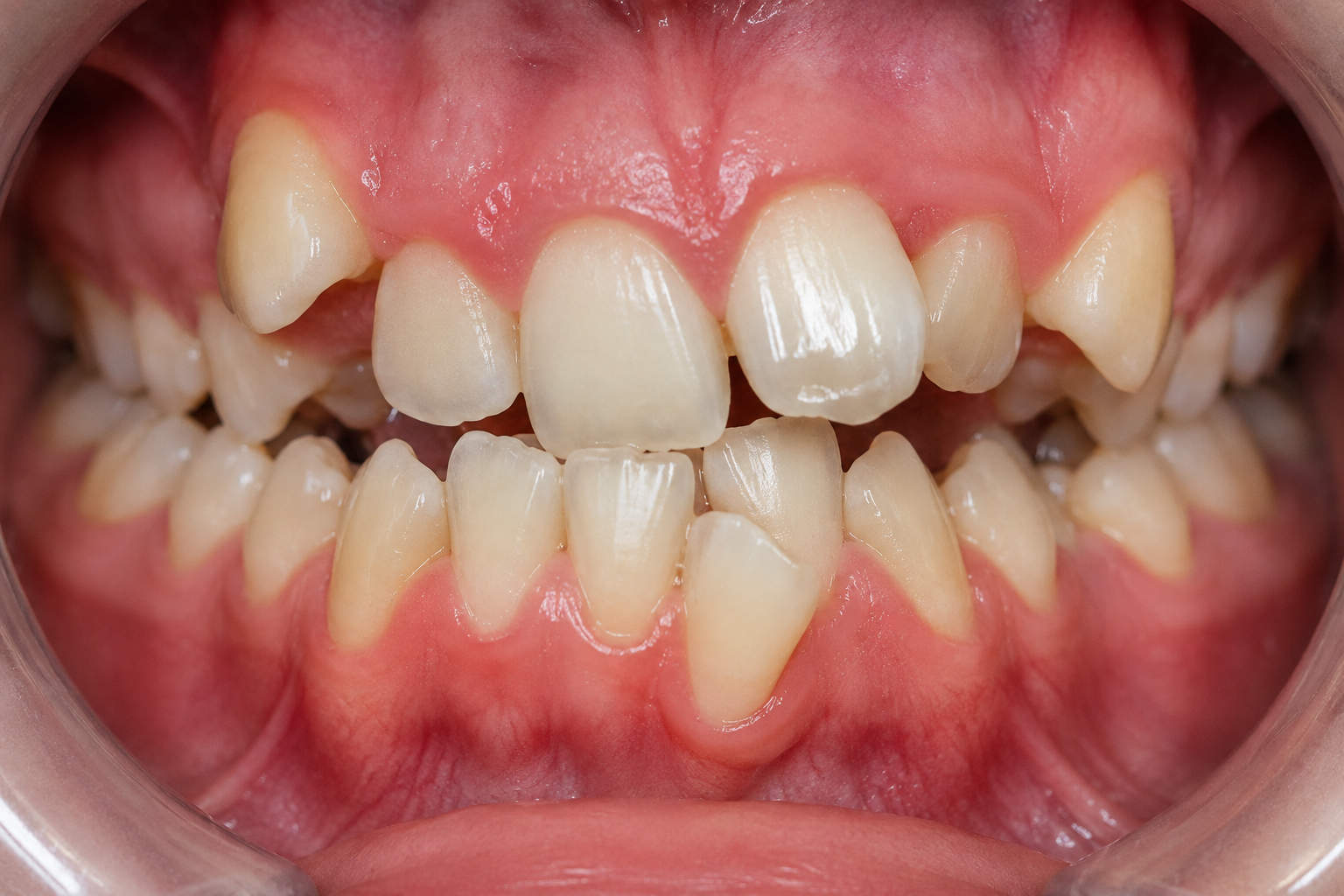
Crooked teeth are a common dental concern that can affect the appearance of your smile, bite, and overall oral health. They may develop due to genetics, overcrowding, childhood habits, or changes in jaw development over time. Left untreated, misaligned teeth can make cleaning more difficult and increase the risk of dental problems. Early evaluation and appropriate treatment help improve alignment, function, and long-term oral health.
Know the Signs
Common Symptoms
Crooked teeth may become more noticeable as they affect your smile and bite over time. If you’re experiencing any of the following symptoms, it’s a good idea to schedule a dental evaluation.
- Misaligned Teeth: Teeth may appear uneven, twisted, or positioned outside their normal alignment.
- Crowded Smile: Limited space may cause teeth to overlap or grow too closely together.
- Difficulty Cleaning: Overlapping teeth can make brushing and flossing less effective each day.
- Uneven Bite: Misaligned teeth may affect how your upper and lower teeth come together.
- Jaw Discomfort: An improper bite may place additional strain on the jaw and muscles.
- Reduced Confidence: You may feel uncomfortable smiling because of uneven tooth alignment.

Why It Happens
Underlying Causes
Crooked teeth can develop from several factors affecting jaw growth and tooth positioning. Identifying the underlying cause helps improve alignment and prevent future complications.
- Genetics: Inherited jaw size and tooth position may contribute to misaligned teeth.
- Overcrowding: Limited space can force teeth to grow in uneven or crowded positions.
- Childhood Habits: Thumb sucking or prolonged pacifier use may affect tooth development.