
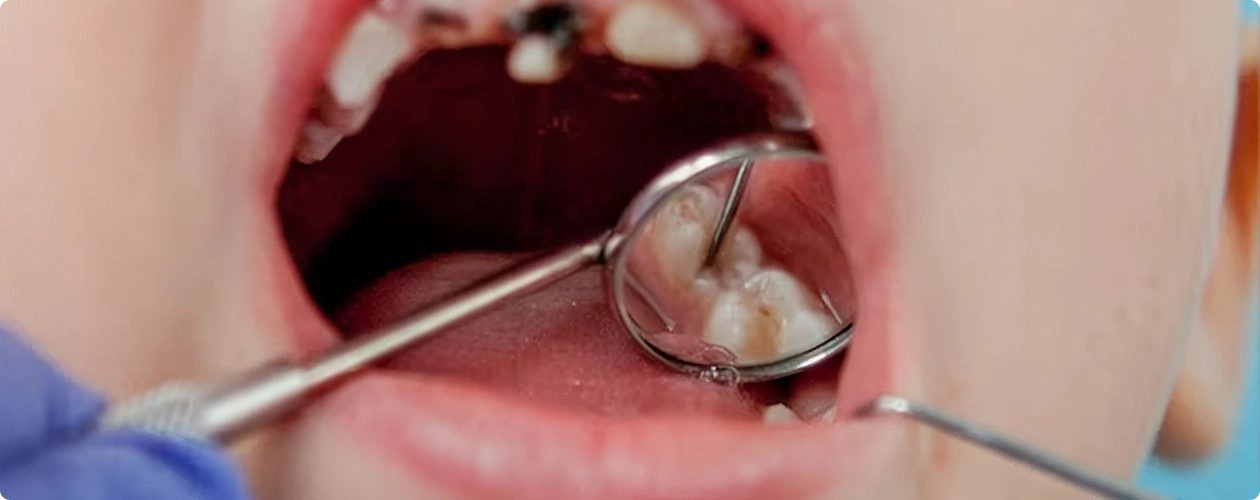
Receding gums occur when the gum tissue gradually pulls away from the teeth, exposing more of the tooth surface or root. This condition is often caused by gum disease, aggressive brushing, or other oral health factors over time. It can lead to sensitivity, discomfort, and an increased risk of tooth damage if left untreated. Early diagnosis and appropriate treatment help protect your gums, preserve your teeth, and restore lasting oral health.
Know the Signs
Common Symptoms
Receding gums often develop gradually, making the early signs easy to overlook. If you’re experiencing any of the following symptoms, it’s a good idea to schedule a dental evaluation.
- Tooth Sensitivity: Sharp discomfort when eating or drinking hot, cold, or sweet foods.
- Longer Looking Teeth: Teeth may appear larger as the gums gradually pull away.
- Exposed Tooth Roots: The tooth roots become visible, increasing sensitivity and discomfort over time.
- Swollen or Tender Gums: Red, irritated gums may indicate inflammation around the affected teeth.
- Bleeding While Brushing: Gums may bleed easily during brushing or routine flossing sessions.
- Loose Feeling Teeth: Reduced gum support can make teeth feel less stable over time.

Why It Happens
Underlying Causes
Receding gums can result from several factors affecting the health of your gums and teeth. Identifying the underlying cause helps prevent further recession and protect your smile.
- Gum Disease: Bacterial infection can gradually damage the gums and supporting tooth structures.
- Aggressive Brushing: Brushing too hard may wear away healthy gum tissue over time.
- Poor Oral Hygiene: Plaque buildup can irritate the gums and contribute to gum recession.