
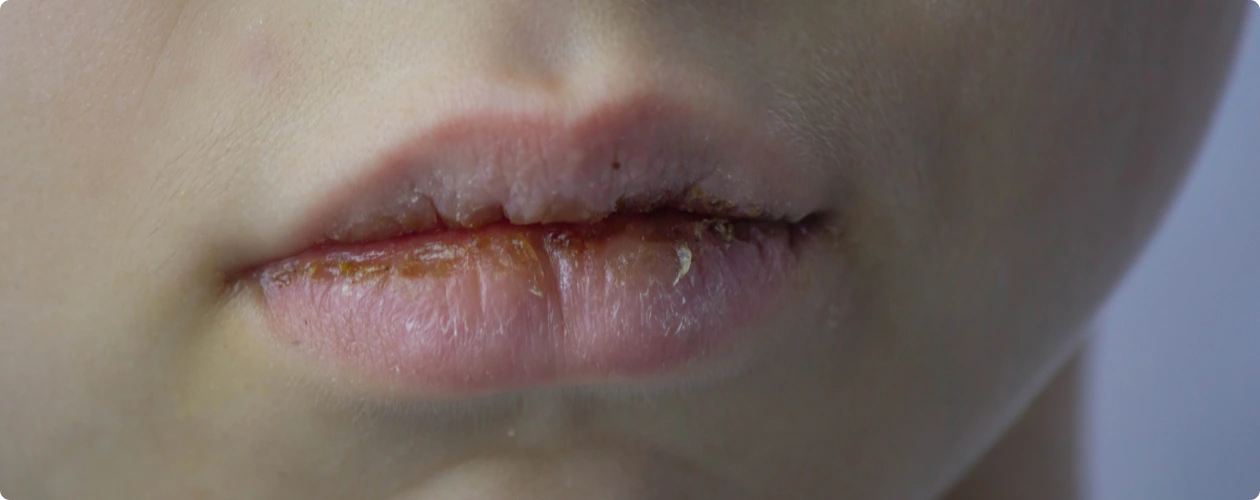
Dry mouth is a common condition that occurs when your mouth does not produce enough saliva to stay properly hydrated. It may be caused by certain medications, medical conditions, dehydration, or other factors affecting saliva production. This can increase the risk of tooth decay, bad breath, and difficulty eating or speaking. Early diagnosis and appropriate treatment help restore moisture, protect your teeth, and maintain lasting oral health.
Know the Signs
Common Symptoms
Dry mouth may develop gradually or appear suddenly, depending on the underlying cause. If you’re experiencing any of the following symptoms, it’s a good idea to schedule a dental evaluation.
- Constant Dryness: A persistent dry feeling may affect the mouth throughout the entire day.
- Sticky Saliva: Saliva may become thick, making the mouth feel uncomfortable or sticky.
- Difficulty Swallowing: Reduced moisture can make swallowing food or drinks more difficult.
- Bad Breath: A lack of saliva may allow odor-causing bacteria to multiply more easily.
- Cracked Lips: Dry tissues may cause the lips to become sore or cracked over time.
- Increased Thirst: You may frequently feel thirsty despite drinking fluids throughout the day.


Why It Happens
Underlying Causes
Dry mouth can result from several conditions affecting saliva production and oral health. Identifying the underlying cause helps restore comfort and prevent future dental problems.
- Medication Use: Certain medications can reduce saliva production and leave the mouth feeling dry.
- Dehydration: Insufficient fluid intake may decrease saliva and contribute to oral dryness.
- Medical Conditions: Some health conditions can interfere with normal saliva gland function.